
“Watch My Feet”

Have you ever thought about the power of your feet? I don’t mean as in you have a really strong big toe but that your feet take you to an incredible amount of destinations on a regular basis. Think about it—if you are hungry your feet take you to food, if you want to work out your feet take you to the gym or simply for a walk around the block, if you want a new dress your feet will whisk you to nearest sale rack.

You show people everyday who you are by how you move your feet. If I go to a certain place people are going to assume things about me. If I take my feet to Burger King you might think that I enjoy the food. If I take my feet to the salon you might think that I care about my hair and if I go to church you just might think that I’m religious. 

Many of us, though I certainly recognize not all of us, have been given the free will to move our feet wherever we would like for them to go. Because of this I have a hard time understanding people who  take their feet to places and/or events in which they don’t believe in, find offensive, or that make them uncomfortable. 

The invisible string of social pressure leads college students to move their feet in places that, along with the rest of their body, do not have a desire to attend. This could be the embarrasing dance competition or the dodgeball tournament that brings back horrid middle school memories, but in many cases I find that it is the derogatory theme party or an alcohol soaked social event that on any normal day, in any other time of their life, their feet would make a swift turn away and walk back to the safety of concord. Instead they move steadily forward with the herd afraid to have a diffferent cadence than the others. Left Right Left Right Left Right…

In my role these students often say things like, “Why are groups allowed to have events like this?” or “I was completely overwhelmed but there is nothing else to do on Friday/Saturday night.” “I mean, if I don’t go how am I going to hang out with all of my friends?” and ”I have to go or I’ll never be able to become a member of that group.”

All of these comments boggle my mind.

My responses include the following: 
1. Hmm…if this event is so awful, why do you continue to go? No one ALLOWS these groups to have these horrid events—I can assure you these shin digs are not following any of the policies we have set forth for our students or the values that we hope our groups uphold. If you don’t want them to have these events then stop supporting them by attending. Attending means that you not only accept what is going on at the event but that you LIKE it. Since this is not true I would suggest you not go. 
2. What do you mean there is NOTHING to do on campus on Friday/Saturday night. True, those events are heavily attended but not all of the students on this campus were at that party. They had to be somewhere. I mean with all the overprogramming occurring on this campus and the amount of complaining that goes on about this issue you are telling me that we neglected to program on multiple nights of the week. Sounds totally logical to me (note my sarcasm). And, uh, have you ever thought about leaving campus—I know, that’s crazy talk, but there is a whole new world out there waiting just for you. Jasmine and Aladdin would be happy to accompany you on this adventure :). 
3. Maybe you need to make some new friends.  It is totally healthy to have multiple friend groups and certainly healthy not to hang out with the same people ALL the time. Do your friends know how you feel about these events and how they make you feel? If they do, but continue to pressure you into attending then you might need to examine those relationships.
4. So, wait. You hate the events thrown by this group and think they are rotten human beings but you want to become a member? Hmm…that makes the most sense EVER! Come on, really? Sigh. Is that really who you are? From what you are telling me I don’t think that’s the case. How is it going to be any better once you become a member? Let’s do some internal reflection and figure out what you truly want out of this joining experience. 

Yes, we need to do some work on college campuses to cease the existence of many of the events in question but in order to change the culture we are going to need some buy-in from those that not only host the events but also those that attend.

A person’s presence or lack thereof sends a powerful message about who they are and who they wish to become as a result of the higher education experience. I know that it can be hard for students to take a stand on this matter; stepping up to verbally confront these events could be overwhelming and above their current developmental level. As their advisor, next time when you find that they are struggling to find their voice do them a favor and encourage them to find their feet instead. This discovery could, literally and figuratively, take them a long way.
“Neighborhood Watch”

My mom is a nosy neighbor. She can tell you a great deal about the families that live in our neighborhood.  The crazy thing is that she’s never even had an in depth conversation with these people except the mandatory automatic “Hello” exchange that is ever present below the Mason-Dixon Line. She just watches them like a hawk through the upstairs window and at times she is spotted standing in her screen door just checking out the view. Because of what she sees she has formed some pretty in depth perceptions about the lives these people lead. She judges them based on what they do, how they speak to their family members, whether or not they have visitors in their home, the places they shop when they bring bags home from the store and whether or not they leave their house on Sunday mornings to go to church. 

Am I in total support of my mother’s informal neighborhood watch program? No, but to a certain extent don’t we all engage in this behavior? We are a judgement oriented society and for many reasons we size those around us up all day long and make assumptions based on what we see. We might not feel great about stereotyping others but those schemas help us navigate a life chock full of new interactions. We don’t have the mental capacity to process every person we encounter in a meaningful way; instead we take a few cues and create our image of this individual. We do this with inanimate objects as well which is why we often don’t mistake a chair for a car. 

When I walk outside to my car in the morning and leave my car when I arrive back home at night I often wonder what must my neighbors think about my life.  What would your neighbors think about you if they watched you through the window? Would they get an accurate picture of who you are as a person? 

My neighbors would probably tell you that I leave early, come home late, dress in a stylish manner ;), check my mail every other week or so, I work out at weird hours, almost every Monday night there are about 15 women who show up to my apartment, and on Sunday morning I leave and come back a couple hours later often with a red Kindle in my hand. They would probably know if they looked at my car that I attended college and am super proud of my alma maters and that I’m in sorority. If they paid really good attention they would be able to tell that I moved here with NC plates and now I have TN plates signaling I’m a newer resident of the state. I’m one of the few people who isn’t seen walking a dog and my across the hall neighbor would tell you that when I first meet a dog I’m a bit weary of them. They might also notice that I live alone and am single considering that I carry my own trash, clean out my own car, and carry my own groceries up the steps. Perhaps they notice that I eat out quite a bit and that I enjoy shopping. If they are super observant they might also tell you that I’m a bit forgetful as on multiple occassions I’ve gotten into my car, quickly realized I forgot something and dashed back up the steps to retrieve the item in question. If they looked hard on many Saturday mornings in the fall they’d know that I’m into Vanderbilt football as I sported my “Greeks Love the ‘Dores” stickers.  I hope that they have taken notice that I smile and speak to everyone I run into while navigating the parking lot. 

What would your neighbors say about you? Think about how you behave during that short walk from the car and back and whether or not the story one might create about you is one that would match your desired self-image. My neighbors could conjure up a wide variety of stories about who I am and what I value from these snippets of information. However, nothing that I think they see causes me any alarm. I can sleep at night knowing that I don’t represent myself in those short moments in a way that betrays my values.

Students, who live off-campus, really need to take this into account. If you live in a neighborhood with non- college student neighbors who are, in many cases, families with children that have resided in the area for a long period of time it would behoove you to reflect on what you and your roomies are doing in and/or around the house that might lead people to not want you to be their neighbors. Sure, you might be an intelligent person who is a campus leader and does community service and philantrophic work on the weekends but if your neighbor across the street only sees you raging on the front porch or creating a massive amount of noise as you and your bros frat it out in the ‘burbs then just imagine what that person is going to say about you when asked about your character. The words “community” and “service” will not be used in the same sentence so much as the words “community” and “nuisance” will take their place.

Don’t get all creeped out thinking about your neighbor leering at you but try to put yourself in their shoes.  Imagine what you must look like from their perspective. If what you imagine is bothersome to you then I would suggest you work on improving how you are presenting yourself in those brief moments. Every moment counts.

“You are the most important client you will ever have.”

You are your own publicist. Don’t wait for someone to generate press about you. Make some moves and let others know the real deal on who you are and what you bring to the table. Our society isn’t great at “good news”. We thrive in bad news. Some of us yearn for a juicy story about the current downfall of the day. A puppy rescuing a cat from a tree gets that last little bit of news as the credits are beginning to roll and oops, the screen totally blacked out before the story was complete! I beg my students to tell me how many philanthropic dollars they raised or community service hours have been completed by the chapter but I can’t escape the poor behavior (alleged and real) of our students that lead to negative news coverage. 


People don’t walk around with an extra supply of gold stars to give to you when you commit an act of awesomeness. You’d better get to Hobby Lobby and secure your own arsenal of gold stars, smiley faces, and those Good Job stickers with a red apple in the background. Remember those? 


My hope is that we all have a set of personal cheerleaders BUT if you don’t then you’ve got to become your own and fast. I’m not telling you to be arrogant but I am telling you to be confident and convinced that you have skills, competencies, talents, traits, experiences, and tendencies that need to be promoted and celebrated. 

If you want to get ahead you are going to have to become comfortable giving yourself the proverbial high-five. Though, I ain’t really mad at you giving yourself a literal high-five ;). I mean sometimes you are just THAT amazeballs! 


Here are some tips for success: 

1. An easy way to do this is to constantly update your resume. We often update  it when we need to but in the meantime we don’t even look at the document. Because those experiences have now passed us by we might lose some of the descriptive intensity that could add a new layer of richness to our resume. 

Keep a comprehensive list of projects you’ve completed. Everything might not have made it onto the resume but that doesn’t mean that it was unimportant or lacked an impact on your growth as a professional. Be able to share what you do all day. Also, when  performance review time arrives you’ll already have a list of programs, projects, and positions that you can share with your boss to aid you in achieving exemplary marks on your review. 

2. Hone in on the transferable skills that exist in all of our positions. I always say that working in Greek Life has given me an incredibly well-rounded skill set. When people see Greek Life they might just think basic advisement of sororities/fraternities BUT when they look deeper they can see that there are aspects of Leadership Development, Multicultural Affairs, Residence Life, Crisis and Risk Management, Student Conduct, Orientation, and Parent & Family Relations. My job is to learn how to clearly articulate how what I have done can easily be relevant to another position. Articulation of transferable skills can get you positions that on the surface you never thought would be accessible to you. 

3. Engage in relationship building. People are always going to ask you these questions: 
1. What do you do? 2. Where do you work? 3. In my case, what does that mean? 4. Where are you from? 5. Where did you go to college? Learn how to have a “dinner party” story of your life. I don’t necessarily suggest that we go around basing our life off of Twitter but it has led many people to understand how many extra words they use on a daily basis to say simple things. How can you answer these questions in a way that keeps people engaged in the conversation. Go ahead and hand out that business card—I mean, they order them in a bulk of 500 so I suggest you start disseminating if you plan to rid your desk of them at some point in the near future. Challenge yourself to meet 3 new people at every new interaction you have with a group, remember them and follow up in a timely manner. People love a good informal coffee or lunch interaction. 

4. Keep your references aware of where you are and what you are doing as well as your overall vision for your professional life. We often list a reference, the person gets called or has to write a letter on your behalf and then we might tell them the outcome or we might not and before we know it we’ve been in a position for multiple years and haven’t checked back in with our initial references. Keep those folks informed and close to you so that you can develop a diverse pool of professionals to make that critical call or send the letter that could ultimately set you apart from other candidates. 

5. Report your life updates to any outlets in which you have access. For instance, when things happen in my world that I deem worthwhile and newsworthy I send an update to my Alumni Magazine for my undergraduate program and the e-newsletter for my graduate school program. Your alumnae chapter might have a newsletter or your inter/national organization might have an alumnae update feature. Maybe you are in the Junior League and you can submit posts to the JL Publication.  You never know who’s reading. 

6. Speak up! When you are in a situation such as a seminar, training, conference, or another meeting of the minds do yourself a solid and share your thoughts or ask a question. People will recognize that you are engaged and curious about the matter at hand. They will hear your voice and might just remember that you are that clever person who asked that earth shattering question or made that incredibly profound remark. Maybe that’s a bit dramatic but bare minimum they will know you are in the room. That’s certainly 10 points ahead of where you started when you sat down with your snazzy Padfolio. 

7. Apply for things—ask for opportunities—generate projects that will contribute to the outcome of your organization’s mission, goals, and vision. If you want people to know what you are capable of doing then you have to DO SOMETHING!! Step up and volunteer for committees, boards, focus groups, and task forces. Sometimes you are just appointed to these opportunities or as I like to say, “voluntold” and that could be incredibly beneficial.  After internal reflection and proper discernment say “Yes!” to these chances to show ‘em what you got. This is also helpful when it comes to intentional resume building. What experiences do you think you are “missing” for your next ideal position? Could you get that experience at your current job? If so, make that happen. 

8. This might sound super simple but, uh, it might be good for you to simply SHOW UP!! Attention and opportunities go to those who are in the room. You might be surprised by who notices your presence and appreciates that you are there, on time (EARLY), and ready to be a part of the team. Maybe there is a program or event that you know your other colleagues are not going to attend but perhaps there are some key people in the room. If I were you, I might just be attending that program (hint, hint). 

9. You need to take time to craft your authentic image in written and verbal mediums. I should also add that since social media has taken over the world you really need to clean it up out there on the World Wide Web. Twitter, Tumblr, Facebook, and LinkedIn plus countless other sites could keep you from progressing in your area of choice. What happens when I Google you? You might want to try that right now…No, like seriously, Google yourself. If you want people to look at those sites and see the polished professional you are then you might want to consistently update and manage the content of these sites. People will search for you…

10. In reference to social media—use it intelligently. Post strategically about what you are up to in your professional world. Could you take time to author a reflective blog about an educational experience? Could you use it to create a continued networking and professional development channel? The answer is yes to both those questions. 

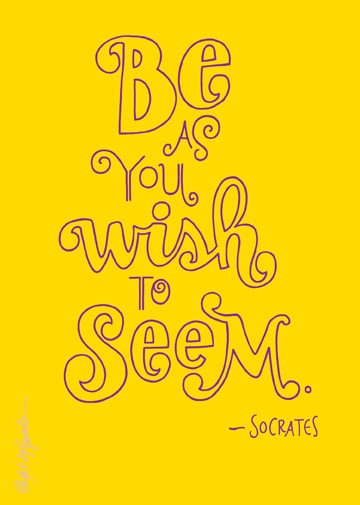
Your actions and your words should go hand in hand and that is certainly the case when one is being an effective personal publicist. Cliche Time:  ”Act in the way you wish to be seen” “Perception is reality.”  ”Practice what you preach.” “Talk the talk and walk the walk.” Your actions should not drown out your words; they should match them and enhance their power. Congruence is CRITICAL to the success of your PR efforts.  Remember, DWYSYWD- “Do what you said you would do”. 

So, take some time over the next week and put the puzzle of you together. Then figure out the best way for you to display this puzzle to others. Just know that until the DCC (Dallas Cowboys Cheerleaders) start following you from door to door you’ve got to become comfortable tooting your own horn, if not you; then who? Toot! Toot!